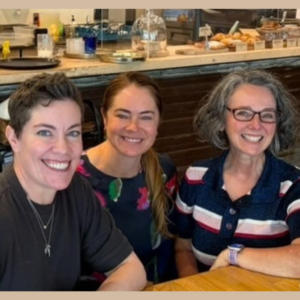
‘Enlightening’, ‘Practical’ and ‘Engaging’: That’s how guests described the recent Take on Board online event with Karen Tisdell.
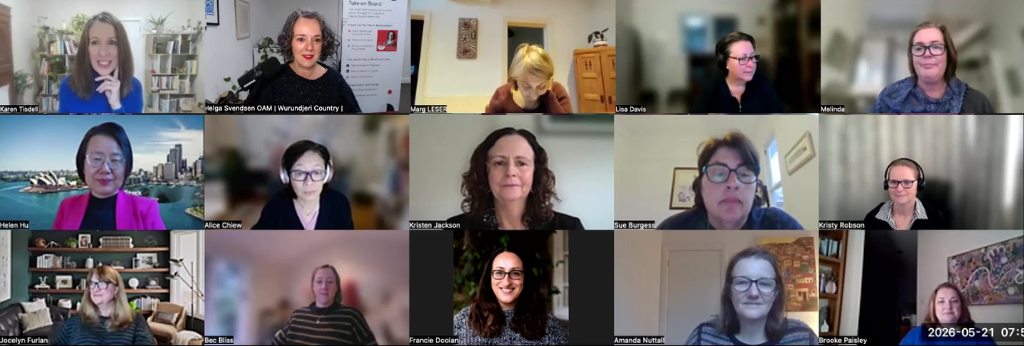
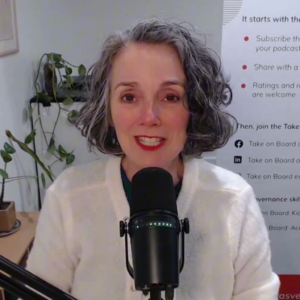
In this highly anticipated and booked-out event, our guest speaker, Karen Tisdell, answered questions from participants that had arisen from the Take on Board podcast episode 353: Karen Tisdell wants to help you maximise your LinkedIn profile.
We learned:
- How to stop wasting time scrolling and start making LinkedIn work for your specific board goals
- How to signal board availability without compromising your consulting work or undermining your current role
- How to get into the right circles – and become the obvious referral when board roles come up
Key insights from the session:
1. Word clusters in profiles
Focus on your future goals, not just past roles. Weave future-focused keywords (like strategy and governance) into sentences so the algorithm finds them naturally, keeping day-job and board keywords separate.
2. Balancing job and board searches
Skip the green “Open to Work” frame. Instead, add a new profile entry confidently stating you are seeking your next challenge. Include a brief summary of your achievements, interests, and email address.
3. Handling a big career change
Don’t compromise. Share the story of why you joined your new role, explaining why that specific organisation and sector matter to you.
4. Showing personality professionally
Use The CliftonStrengths Top 5 Report to identify your unique traits. Avoid overusing adjectives; instead, state what you do and use phrases like “I’m excited by” to show personality.
5. Leveraging networks for board searches
Aim for over 500 quality connections. Thank people for connecting, take relationships offline for a coffee or chat, and be clear about the skills you offer and the specific board roles you want.
6. Content creation
Build a strong profile and network first. View content as a two-way conversation rather than a broadcast, and make sure to actively reply to comments.
7. Balancing paid and board work
Rearrange your LinkedIn Experience section so your most relevant roles appear at the top in the order that best serves your current goals.
8. Current algorithm trends
The main feed wastes time. Use the “My Network” and Notifications tabs to track connections, and use the “bell” icon on key profiles to train your feed. Never blindly repost; always add your own thoughts or comment directly.
Karen also shared a few additional LinkedIn tips separately. In response to a question about long-form content, Karen noted that both very short posts and longer, more thoughtful pieces can perform well. Her preference is usually the middle ground. If a piece goes beyond about 350 words, she suggests considering whether it might work better as an article in a newsletter series, which also helps you build subscribers and see who is following your thinking. A resource on this here.
Karen also highlighted the importance of linking properly to your organisation in the Experience section, particularly if you work in an institute or centre within a larger parent body. If your institute does not have its own LinkedIn page, she recommends linking to the broader organisation by typing the name slowly until the correct page appears, then using the title field to include both your role and the name of the institute or centre.
Finally, she encouraged people not to hide their last name on LinkedIn, as it can make profiles harder to find and may unintentionally create distance. Karen recommends everyone enable two-factor authentication via Me > Settings & Privacy > Sign in & Security.
What did the attendees like about this event?
” I’ve got a lot to do, and it has given me the spark to start to tackle the daunting task of updating my LinkedIn profile”.
“I found it really helpful to hear from Karen, and I loved the real examples she used of LinkedIn profiles of board members”.
“The opportunity to make connections with other participants was great”.