
I am one of those people who is quite particular about LinkedIn.
As many of you will know, if I don’t know you, I generally won’t connect with you. If there seems to be a good reason for us to know one another, I would much rather suggest a virtual cuppa first so we can actually meet, have a conversation and work out whether there is a connection there beyond the button we have clicked.
That might sound counterintuitive coming from someone who has spent much of their career developing a strong network — I think the two things are directly related.
For me, networking has never been about accumulating names. It has always been about building relationships with people I am genuinely interested in knowing, learning from and staying connected to over time.
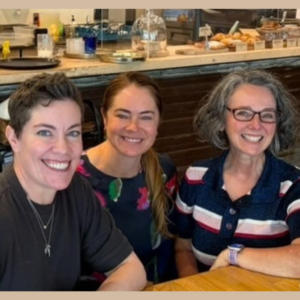
I have always approached professional relationships this way, although I hadn’t necessarily put the language of “relational versus transactional” around it until this distinction came up in a recent KickStarter catch-up.
We were talking about the different ways people approach networking when they are building a board career. There was a useful conversation about when being transactional can feel like the most efficient option: you know what you need, you identify somebody who can help, you make the ask and hopefully both people walk away knowing exactly what the conversation was for.
As we talked it through, we kept coming back to the richness of the relationships that are built differently — through curiosity, reciprocity, shared interests and the fairly simple act of getting to know another human without requiring them to produce an outcome for you.
So much of the machinery around our professional lives nudges us the other way. We can connect with hundreds of people without speaking to them, follow thousands more, measure reach and engagement, automate introductions and become very strategic about who we engage with.
Useful tools in the right context. Although, they can also make it surprisingly easy to confuse access with relationships.
The professional world is still a human one
I completely understand why networking becomes more transactional when there is pressure attached to it.
If you are looking for your first board role, considering a career move, trying to break into a new sector, finding clients or looking for an introduction, there will naturally be people you want to speak with because of what they know or who they know.
Sometimes that is genuinely the purpose of the conversation, and there is no need to pretend otherwise. If you have asked somebody for half an hour of their time because you want to understand how their sector works, being clear about that is helpful for both of you.
The difference is whether the professional transaction leaves enough space for the person.
A transactional approach can start with: what can this person do for me?
A relational one widens the frame: who is this person, what are they interested in, what might I learn from them, what might they learn from me, and what could develop simply because we know one another?
Some of the most useful relationships across my own work have developed without either person knowing at the beginning what they would eventually become.
People come into my world through Take on Board, coaching, a workshop, a board, an event or a mutual connection, and then years later our paths cross somewhere completely different.
Someone I interviewed for the podcast might become a person whose advice I seek — including on networking itself, looking at you Karen Tisdell! A coaching client might later sit on a board I work with. Somebody sends me an article because it made them think of a conversation we had months ago, or introduces me to another person simply because something in their head has thought, “those two should know each other.”
You cannot engineer all of that at the first point of connection, and I don’t think we should try.
There is something wonderfully human about relationships accumulating their own history. You remember what someone was working on the last time you spoke, they remember the thing you were wrestling with, one of you spots something the other might enjoy, and over time there is enough context and trust that the relationship can carry considerably more than the original reason you met.
What we can learn from cats about reciprocity
Now, because I am me, there is a cat tangent here.
I had heard somewhere that cats form more relational connections with women and more transactional ones with men. I’m not entirely sure that claim survives scientific scrutiny, although I will say that in our house it felt suspiciously plausible.
Mungo, our much-loved cat — who many of you will know from his regular cameos on podcasts, meetings and any other moment he decided required his input — had very clear ideas about relationships. He was my constant work-from-home companion for five wonderful years, and we very sadly had to farewell him recently after a terminal diagnosis.
My partner and I would probably both tell you that Mungo related to us differently, which is what sent me down the rabbit hole — or perhaps the cat flap — of whether there was actually anything in this idea.
The research is more nuanced, as it usually is. Cats do not appear to inherently prefer women over men — rather, they respond to how people interact with them. Studies have found that women can be more likely to get down to a cat’s level, vocalise with them and engage more frequently, with those interactions showing greater reciprocity.
Even more interesting to me is the give-and-take researchers have observed in cat-human relationships. When a person responds to a cat’s attempts to interact, the cat is more likely to respond to that person’s attempts at other times.
Anyone who ever saw Mungo wander into one of my meetings will know he had extremely firm views about when interaction should occur, so that part I have no trouble believing.
There is something useful in the underlying idea for us humans too. Reciprocity is not about matching favour for favour or keeping score. It develops through the way we respond to one another over time. Do we pay attention when someone reaches out, remember what they told us, make room for what matters to them and stay present even when there is nothing immediately useful in the interaction for us?
Relationships become relational because of how we participate in them.
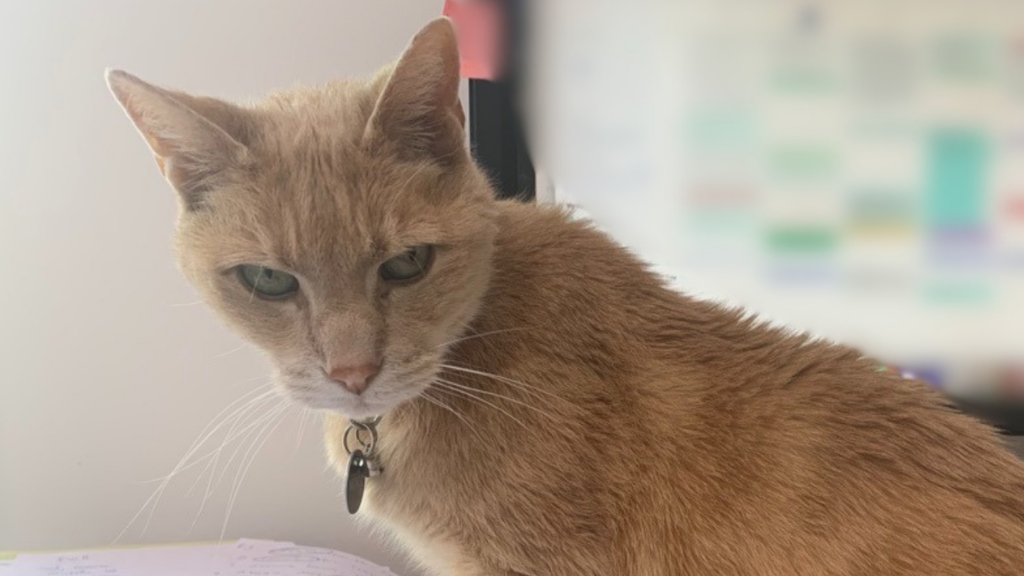
Image: Mungo, our much-loved cat
Networking without keeping score
I think one of the reasons people sometimes dislike networking is that we have been taught it is an exchange to be managed.
Know your objective, prepare your ask, make yourself useful, follow up appropriately and, ideally, leave with a lead, an introduction or the next conversation booked.
There is sensible advice in there. I am certainly not advocating for turning up to every professional coffee with no idea why you are there and hoping charisma will take care of the rest.
What I would question is the idea that the usefulness of the conversation can be measured entirely by what happens in a transactional sense.
If somebody gives you extraordinary advice today and there is nothing particularly valuable you can offer them in return, that does not mean you have somehow failed the relationship. You may be useful to them two years from now, you may introduce them to somebody six months from now, or your contribution today may simply be genuine interest, thoughtful questions and a good conversation.
Curiosity, contribution and continuity
For those who hear the word “networking” and immediately picture an awkward room full of name tags, there is a simpler way to think about what you are trying to do.
I come back to three things: curiosity, contribution and continuity.
Curiosity means being genuinely interested in the person rather than only the professional asset they might represent. Listen for what they are working on, what shaped their path, what they care about and what they can see from where they sit that you perhaps cannot. You don’t need to interrogate them over coffee to achieve this — curiosity tends to make itself fairly obvious when it is genuine.
Contribution asks you to think about what you bring to the relationship too. You might know somebody they would enjoy meeting, come across a resource that relates to something they mentioned, share an experience that helps their thinking, or simply give them your full attention rather than waiting for the moment to steer the conversation back to your own ask.
Continuity is about noticing whether there is a natural thread worth keeping hold of after the conversation. If somebody tells you about a project they are launching, remember it. If something crosses your desk a month later and makes you think of them, send it through. If a person comes to mind who they would genuinely benefit from knowing, make the introduction.
That is probably the closest thing I have to a networking system (which will disappoint anyone hoping for a colour-coded spreadsheet).
Relationship first, result later
When I look at the relationships that have shaped my own work and life, very few of the valuable ones began with a clear understanding of what each person would provide to the other.
That feels increasingly worth protecting in a professional environment where so much can be measured, optimised and made more efficient.
We can count our connections, track engagement and identify exactly who opened what. What is much harder to measure is the value of somebody knowing how you think, remembering what you care about, trusting you enough to ask a difficult question or thinking of you when an opportunity appears three years after you first met.
Those outcomes are difficult to optimise because they require time and, inconveniently, genuine relationship. Perhaps that is why I still prefer the virtual cuppa.
So, the next time you catch yourself thinking that you really should do more networking, I would resist immediately turning that thought into a list of people you ought to connect with.
Think instead about one person you are genuinely interested in knowing better, and begin there. Bring curiosity to the conversation, contribute where it feels natural and, if there is a thread worth following afterwards, keep hold of it.